
Spectrum capture
Build an architectural bowl—interface, journey, and interaction loop—that absorbs varied flows: smooth warm emotions and sharp cold triggers.
SureLays product methodology
A product viability model for designing experiences that focus attention, support therapeutic behavior, and aim for durable engagement.
Explore the framework01 / Core thesis
Traditional digital products—social media and many consumer apps—rely on forward dopamine loops: infinite scroll, intermittent variable rewards, and fragmented attention. They spend user energy to maximize ad impressions.
In HealthTech, DTx, and SaMD, that model can fail patients. People do not need another addictive distraction; they need clinical outcomes, adherence, and meaningful behavioral shifts.
The solution
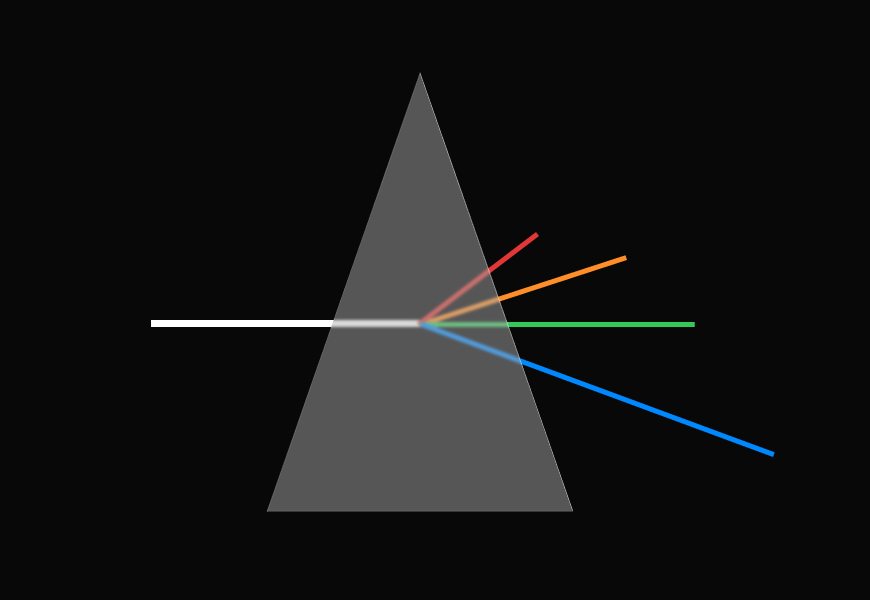
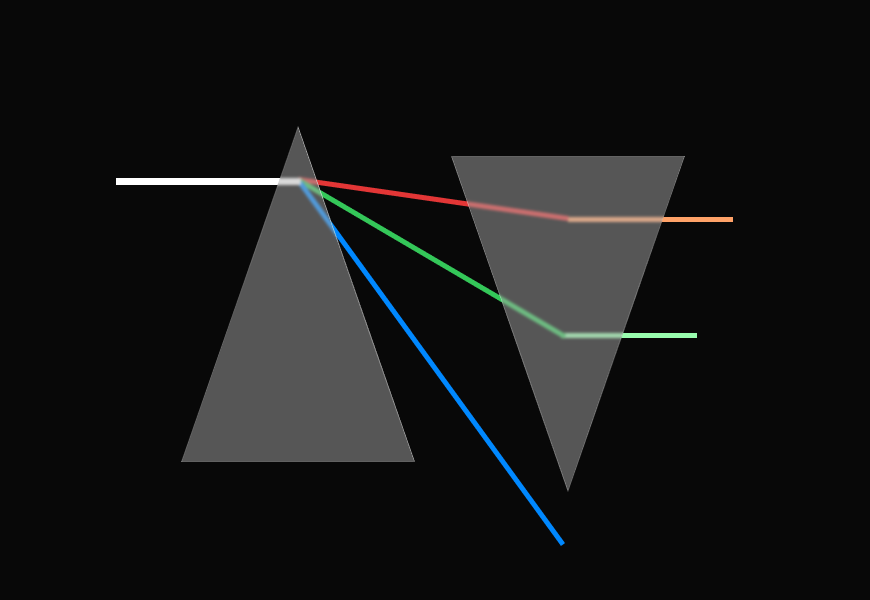
Instead of scattering user attention, the interface acts as an optical lens: it filters out noise, channels focus inward, and locks the user onto the core therapeutic value of the product.
We apply the Recombination Vortex—a reverse dopamine loop—to capture the spectrum and return it as a unified focus of attention.

Build an architectural bowl—interface, journey, and interaction loop—that absorbs varied flows: smooth warm emotions and sharp cold triggers.
Use carefully designed interaction geometry to catch diverging vectors, turn them gently, and pull them into a unified loop.
Let the closing circuit condense dispersed attention into a clear, productive intention.
02 / Physics of engagement
R75 borrows the physics of light refraction through media of varying densities to evaluate product viability and user-retention thresholds.
01 / Descope threshold

Physics analogy
The light beam hits the medium at an incorrect angle and scatters completely.
Product reality
The user drops off early, value is not communicated, and cognitive friction kills adoption.
Action
Descope immediately. Features falling into this zone are redundant engineering weight that must be cut before development.
02 / Iteration loop

Physics analogy
The beam enters the medium and refracts, but the density is insufficient to hold the angle—the light drifts out of the focal path.
Product reality
Users try the product, but engagement leaks out over time. Retention is unstable, and lifetime value suffers.
Action
Iterate and re-architect. Streamline the core user journey, remove friction, and tighten the value loop.
03 / Scale target

Physics analogy
Perfect refraction. The light converges into a high-intensity focal point and stays locked within the optical channel.
Product reality
The user achieves deep behavioral integration. Retention stabilizes, clinical adherence targets are met, and business revenue scales sustainably.
Action
Scale. This is the validated baseline required for sustainable growth and monetization.
03 / Product architecture
How does R75 work mechanically inside the product architecture?
Replace impulsive notifications with intent-driven entry points aligned with therapeutic or personal growth goals.
Strip away superfluous UI elements, gamification noise, and visual clutter. Focus mental energy on the therapeutic action—such as a CBT exercise, symptom log, or adherence check-in.
Deliver intrinsic satisfaction—clarity, emotional relief, and measurable health progress—instead of empty dopamine spikes. This is what sustains a high-retention loop.
04 / Business impact
Enforcing the 50% descope threshold helps startups avoid building unused features and reduce development costs.
Products that reach the 75%+ retention horizon can support higher lifetime value and lower churn.
Focused UX can support FDA/SaMD expectations, HIPAA/GDPR requirements, and clinical validation standards.
R75 is a product-design framework and strategic model, not a clinical outcome guarantee or a substitute for clinical validation. Retention, adherence, and business results must be measured in context.